Tuesday, September 20, 2011

Almost Autumn


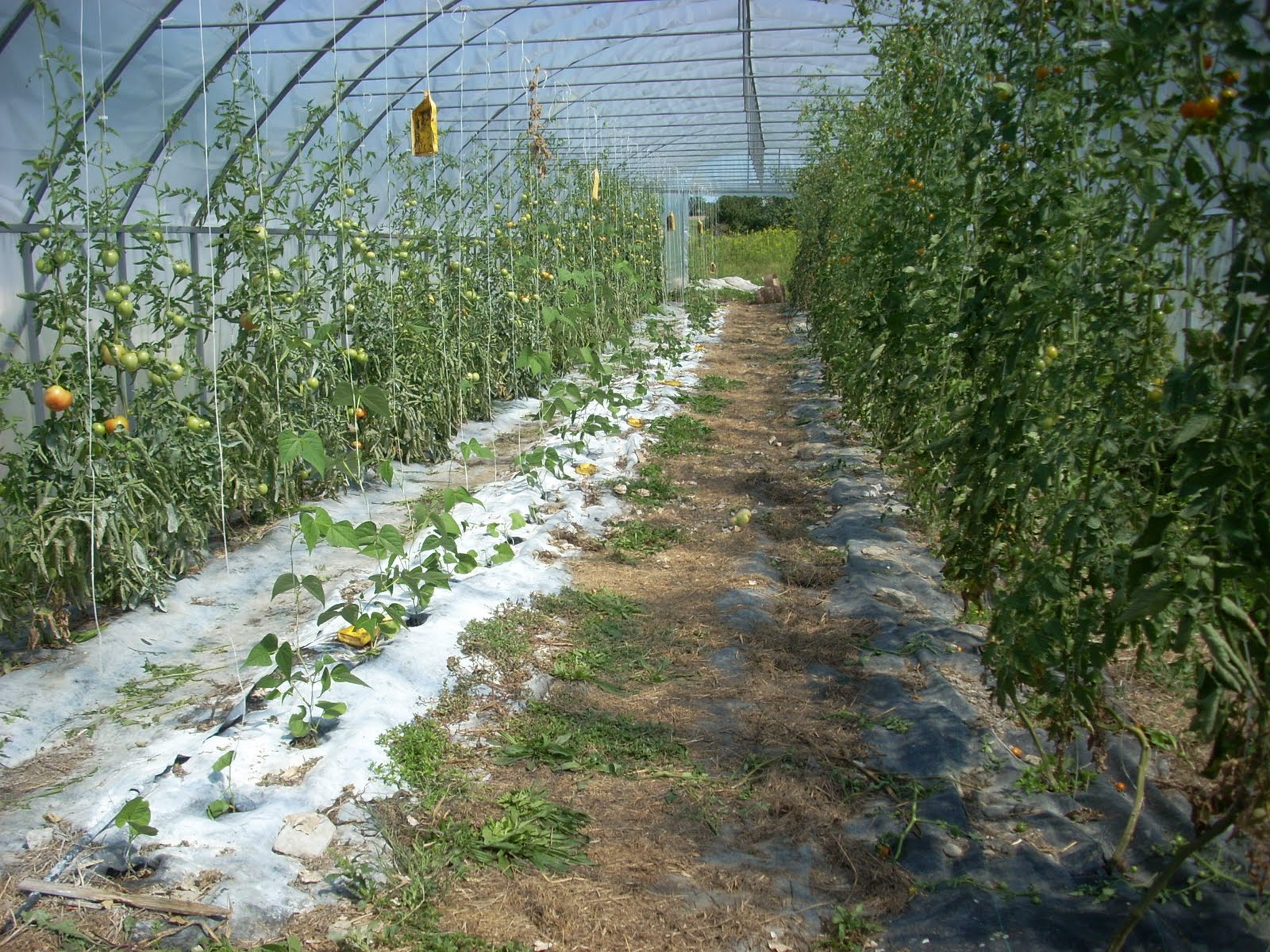
Above: Lettuce transplants for winter harvest.
Liz with the eggplants - taller than her!

Expected vegetables:
Now many of our summer crops are slowing down or done - eggplants, tomatoes, zucchini.
And fall crops are ripening.
This week expect to see potatoes, leeks, onions, garlic, kale, chard, salad mix, carrots, beans, ginger, cilantro, peppers. A few tomatoes, eggplant, zucchini, husk cherries. Possibly some edamame.
New this week: delicata squash and celeriac
Next week expect more of the same plus winter squash, sweet potatoes, Jerusalem artichokes, beets again

It is the time of the CSA season where we try to force you to take and eat celeriac. For those of you who still resist here's another way to eat it.

Creamy Curried Celery Root Soup

Yield 4 servings

Time 45 minutes

Mark Bittman


Ingredients
  • 4 tablespoons (1/2 stick) butter
  • 1 small onion, chopped
  • 1 tablespoon minced garlic
  • 1 tablespoon curry powder
  • 1 to 2 teaspoons ground cumin
  • Salt and black pepper
  • 1 1/2 pounds celery root, peeled and cut into 1- to 2-inch chunks
  • 6 cups chicken or vegetable stock or water
  • 1/2 to 1 cup cream, half-and-half, or milk, or to taste
  • 1/4 cup chopped fresh cilantro or parsley for garnish
Method
  • 1. Put the butter in a large, deep pot over medium-high heat. When it’s melted, add the onion and garlic and cook until they begin to soften, 3 to 5 minutes. Add the curry powder and cumin and a sprinkle of salt and pepper and cook, stirring, for 1 minute.
  • 2. Add the celery root and stir just to coat it in the spices, then add the stock and bring the mixture to a boil. Lower the heat so that the stock bubbles gently and cook, stirring occasionally, until the celery root is fully tender, 15 to 20 minutes more.

  • 3. Cool the mixture slightly, pour into a blender, and purée carefully, or use an immersion blender to purée the soup in the pan. Return the soup to the pan and stir in the cream; reheat if necessary. Taste and adjust the seasoning, and serve garnished with the herb.

Source: The New York Times

Thursday, September 15, 2011

Late Summer


The pictures above are from our friends farm in Vermont whom we visited them last weekend. The fields were completely destroyed after the nearby river jumped its bank and actually changed its course. The river now runs through part of what used to be their field. And the flood deposited a field of rocks and sand and toppled trees in the rest of their former fields. Believe it or not, if those pictures had been taken a few weeks ago you would have seen fertile farmland and literally tons of beautiful vegetables.

Muddy Fingers Farm is still busy. We've been busy every other day trying to get all the harvesting done. Sometimes unsuccessfully. And then we've been busy getting our fall plantings done. And certainly some of the tasks we'd like to get done have been falling by the wayside as we run out of time, energy and daylight. But we are enjoying the cooler temperatures, (over)abundant rainfall, the bounty of the harvest and the anticipation of a beautiful autumn.
The other workers here on the farm are also really busy, too. Every sunny day they are purposefully gathering pollen from the showy goldenrod, purple asters (my favorite), and the flowers of the buckwheat which we have planted as cover crop. And the smell of honey is so thick in the air right now that on a sunny afternoon it can be detected from hundreds of feet away from the hives depending on the direction of the wind.

Happy eating!


Expected vegetables:
Mostly the same, except melons are finished. So are the heirloom tomatoes.
We have eggplants again. Husk Cherries are here too.

Announcement:
Muddy Fingers Farm Fall/Winter CSA

This year we are offering an extension of the CSA season into November and December!

Shares will be picked up at the new Watkins Glen Farmers' Market Winter Market at St. James Episcopal Church on 6th St. in Watkins Glen. The market will be open Fridays evenings (hours not confirmed yet; either 3-6pm or 4-7 pm) in November and December.

The share will consist of 5 items/week and will cost $120.

We plan to have the following vegetables available:

Potatoes, Onions, Winter Squash, Garlic, Brussells sprouts, Carrots, Parsnips, Kale, Chard, Cabbage, Turnips, Radishes, Lettuce Mix, Greens Mix, Beets, Rutabagas, Celeriac, Spinach

Please note: The market will be closed the weeks of Thanksgiving and New Years. We will give out an extra share each week before to make up for these closures.

This is the first year for us doing this and so we are only taking 10 shares. So give it some thought and let us know soon if you're interested.


This recipe comes from a CSA member:


Stuffed Chard with Fresh Marinara

1 Lb. lean ground beef (I used 90% lean)
1/2 cup plain dry breadcrumbs (I used crumbs with Italian seasonings)
2 medium shallots
1 1/2 tsp. Italian seasonings (I don't have so used approx. 1/2 dried basil and 1/2 dried oregano, as I write this I'm wondering why I didn't use the fresh herbs I have in my garden)
1 tsp garlic powder
1/2 tsp fresh ground pepper
8 large Swiss Chard leaves, stems removed
1 14 oz. can reduced sodium chicken broth
1 Tbl extra virgin olive oil
1/4 tsp crushed red pepper
1 28 oz can crushed tomatoes (I cut up fresh tomatoes)
1/2 cup freshly shredded parmesan cheese

1. Gently mix beef, breadcrumbs, 1 Tbl minced shallot, 1/2 tsp. Italian seasonings, garlic powder and 1/4 tsp. pepper in large bowl until combined. Divide the mixture into 8 portions (oblong is suggested)
2. Overlap the two sides of a chard leaf where the stem was removed and place a portion of beef there. Tightly roll the chard around the beef. Place each roll, seam-side down, in a large nonstick skillet. Pour in broth, cover
and bring to a boil over high heat. Reduce heat to a simmer and cook until thermometer (in center of roll) reads 165, approx. 8-10 minutes (I cooked longer to get the leaves nice and tender). Discard any remaining broth.
3. Meanwhile, heat oil in medium saucepan over medium heat. Add the remaining shallot, 1 tsp. Italian seasoning, 1/4 tsp. paper and crushed red pepper. Cook, stirring often, until the shallot is soft - approx. 1-2 minutes. Stir in tomatoes and cook, until slighted reduced and thickened, about 8 minutes (a bit longer if using fresh tomatoes). Serve the Chard rolls topped with sauce and parmesan cheese.

4 servings, 2 rolls each.

Nutrition per serving: 388 calories; 16 g fat (5 g saturated); 43 mg cholesterol; 32 g carbohydrate

Original recipe came from Eatingwell.com; you'll see I took some liberties (which I often do).

Tuesday, August 30, 2011

end of august


our "newphouse" right now


a pepper eye view of the world


rainbow cherry tomaoes!

What a week it has been! Reminiscence have been heavy on hurricanes and luck and how hard it really is to rebuild a strong local food network. Almost six years ago, we were third year farmers on brand new land, but with two years of farming under our belts. It was bone dry, we wept in the fields several times at how dry it was- would rain every come? Would we be able to pay our bills? Could we remain farmers, or would we have to give up this occupation that had its hooks deep into us? Hurricane Katrina, swept through new Orleans, breached the levies leaving ruination there, moved up the country and deposited 5 glorious inches of rain onto our rented land in Montour Falls. The season and our farming careers were saved by that event. I still think today that we would not have been able to be farmers today if not for that storm.

On Sunday our dear friends Kara and Ryan at evening song farm (third year farmers but on a brand new piece of land) were treated to the other kind of luck with a hurricane. They were having a great season producing amazing produce and building a new community around their farming venture, and then hurricane Irene swept through Vermont causing a levy to breach, the river that flowed alongside their farm now flows through where their fields used to be. Their greenhouse and all their fields are now under the new course of the water. The newly purchased and installed irrigation system now is buried under the new route of the Mill River and they have now lost not only all of their crops (and income for the rest of the year), but their land as well. Luck is so cruel and it seems hurricanes bringeth and they taketh away. We hope that they have clarity as they decide their paths forward and community support to help them as they recollect, relocate, and restart. www.eveningsongcsa.com shows what they are facing. We are currently focusing as much postive energy as we can their way and will be sending what other aid we can soon. We are so impressed at how organized they have been in laying out what help they need from their community and can only hope that we would show the same resiliance if an equal time of trial were to come to our lives. I do hope their community is steps up to their aid.


In mudddy fingers farm CSA news, there will be no Watkins Glen Market on friday the 9th as the park will be filled with race cars. If you did not receive and email about the alternate plans, please let us know.

Hard to believe but our thoughts turn to winter at this time of year, that's because the window for planting things that will be harvestable before winter is closed or very quickly closing, as the days shorten plants start to grow with less vigor than they did in the extended days of June and July, suddenly the evening is shorter and the shadows longer sooner, even though there is still lots of nice days left in the year, in september we start to think of fall, and eating like its fall. in september we start to bring some fall crops forward, you will see leeks coming every week very soon (we have occasionally brought them up to now), celeriac will make an appearance fairly soon and winter squash too will be showing up before long quite soon our kitchens will be full of the simmers of soups and stews.

For those who want to simmer tomato sauces right now, we have paste tomatoes in good quantity right now and are glad to sell you a half bushel sized box so you can make sauce for the winter. (Sauce tomatoes are bred to make sauce as they are dense and less juicy than other tomatoes and so don't need to be cooked for as long to make a thick sauce, we have red and white- white sauce!?!)

we are arranging and will let you know when our last CSA events of the year will be, check your email in the next week to get them on the calendar. I hope to schedule the ever popular perogie making day and then of course a garlic planting day, and then the season will be done before we know it.

before then, look out for fresh ginger! We begin harvesting in the first week of september and hope to have it for about six weeks! There have been lots of people asking lately and it will soon make its appearance!

keep eating the good stuff,
liz and matthew

Monday, August 15, 2011

over the hump! the wednesday of the season...


at least that's what it feels like. we seem to have passed the hump of the summer. we are at week 11 of 22 for the CSA, so we are halfway through the season! the worst heat of the last few weeks has cooled and there has even been a hint of lingering coolness in the shady spots well into the late morning a few days this week. (but just a hint, it is still august after all!)

the pond still has some water in it for irrigation needs, but the pressure for water is less what the temperature is lower, so it feels like what is still in there should last us the rest of the season. and we had a nice rain over the weekend, getting more than an inch in the rain gauge for the first time in a few weeks.

we were lucky to have no rain on friday night so the meteor watching event was undisturbed by the weather. the moon was quite bright but a few meteors were spotted as they streaked through the sky and we had a nice campfire and some yummy snacks to eat while sat around it. thanks to those who came and slept out with us!

if you didn't hear about the event, let us know perhaps you are not on our email list for some reason!

it seems that the heirloom tomato season will be a short one this year, as the plants are looking like they will not be with us for the long haul, but they will be producing for us for a few weeks more at any rate. make sure to enjoy them in all their colored beauty while they are still with us.


veggies:
tomatoes, peppers, eggplants, squash, beets, chard, kale (back after a couple of weeks off), baby leeks, sweet and regular onions, beans, basil, and fingerling potatoes.

try this yummy recipe for eggplants and squash!
slice asian eggplants, squash, and peppers into bite sized pieces. slice a shallots thinly, toss all in a baking dish. toss wiht olive oil, salt, pepper, and balsamic vinegar. bake 10-15 min. stir and toss with cut up basil leaves. bake another 10-15 minutes until soft. enjoy. we had this with pesto pasta the other night and it was nice!~

have a good week! liz and matthew

Saturday, August 6, 2011

Week 10?

Sorry no new pictures. Our staff photographer is on vacation apparently this week.

I am happy to report that a gentle rain is falling outside right now (which is why I'm not outside planting!). We are grateful for that and the radar currently looks like like more is on its way. Sorry for all you weekenders who had big plans for today, but not everybody can be happy with the weather all the time.

The farm is looking really messy right now. This is mostly because the weedeater we normally use to keep the paths mowed is STILL in the shop awaiting a new carburater. AGHH! This makes harvesting more difficult as we have to wade through the weeds.
But at least we have had lots to harvest in the last two weeks! And now the share size is up to 8 items, and we hope that it will stay at that number for the remainder of the season!

For those members in Elmira, Grove Park Farmers' Market now has a presence on Facebook. It is in the development stage as each vendor starts to add postings of what products they will have available. Here at Muddy Fingers Farm we are Facebook novices, so we will be learning our way around it and I will post a link to the market's facebook page here on the newsletter blog just as soon as I figure out how to!
We have squash blossoms. This is a new crop for us this year that we wanted to try out.
A couple squash blossom recipes that we have not yet tried:

What you’ll need:
6 medium squash blossoms – washed, cleaned and trimmed
2 cups Ricotta – room temperature
1 tablespoon flat leaf Italian Parsley – chopped fine
1 tablespoon Basil – chopped fine
2 large eggs – beaten
1 cup flour – or enough to dredge
Vegetable/Canola oil – enough to fry
salt/pepper

What to do:
1. Place a few inches of oil {enough to submerge blossoms} into a deep sided pot or fry machine and heat to 350 degrees.

2. Place the Ricotta and herbs into a small bowl and mix well to combine. Season with salt and pepper. Transfer into a pastry bag or zip lock bag and set aside.

3. Set up your dredging station by placing the beaten eggs into a small bowl and the flour into a separate bowl. Set aside.

3. Wash and clean the squash blossoms and gently pat them dry. GENTLY pull back the tops of the blossoms, insert the pastry bag/ziplock bag and GENTLY squeeze enough of the Ricotta mixture in to fill the blossom without bursting it. GENTLY twist the tops of the blossoms to seal. Continue until all blossoms are filled.

4. Dredge the blossoms into the egg mixture and then coat with the flour. Tap off any excess flour. Continue until all blossoms are dredged.

5. Place blossoms into the heated oil and cook until golden {this will only take a few minutes} When golden, transfer blossoms to a plate lined with paper towels to soak up any excess oil and you can season them lightly with salt while they’re still warm. They’re best eaten when still warm.

Source www.bellalimento.com

Squash Blossom Quesadillas
1 medium onion, diced
1 clove garlic, minced
1 poblano pepper, roasted, peeled, seeded, and diced
10 squash blossoms
1/2 cup chicken stock
3 sprigs fresh epazote, finely chopped
Salt and freshly ground black pepper
4 flour tortillas
1/4 pound grated Mexican white cheese
Olive oil, butter or margarine, for cooking

1. Heat a large saute pan with a little oil and saute the onion, garlic, and the roasted poblano pepper for 5 minutes, until the onions have become translucent. Then, add the squash blossoms and deglaze with chicken stock. Add the epazote, and cook for another 5 minutes until squash blossoms have wilted. Season with salt and pepper, and set aside to cool.

2. To compose the quesadilla, lay two of the tortillas on a flat surface. Distribute the cheese equally on both tortillas. Then, spread 1/2 of the squash blossom filling over the cheese. Cover with the other tortillas, place on heated griddle or nonstick saute pan with a little olive oil, butter or margarine, and cook for about 3 minutes on each side. When golden brown on each side, remove and cut into quarters.

Source: Adapted from recipe demonstrated by Aaron Sanchez
of the Food Network’s show, Melting Pot.

New items this week
Leeks
Tomatillos
Purple potatoes
Squash blossoms
plus more of the same

Sunday, July 31, 2011

week 9 is fine!

this week i have been thinking about the choices we make consciously and unconsciously each time we lift a fork to our mouths. i appreciate how carefully our CSA members and customers think about their food choices and am always glad that they have chosen us to provide the foods that they eat. What got me thinking about food choices lately is that a shopper made a comment about not shopping for vegetables from some farms at the market because they raised animals for meat as well. as a strong proponant for local farms, the comment stuck with me and i started to think about how it depended what the alternative is.

if rather than support a local farmer who raises animals, the choice is vegetables shipped from california from a giant farm which is bound to the earth, is the choice necessarily a better one? though i have not researched it, i have the funny feeling that this large farm would be owned by a huge food conglomerate that also owns and runs factory farms and/or their enormous feed lots, and/or slaughter houses. now the animals production portion is not on the same land, i imagine, but nonetheless would be controlled and would profit the owners of the vegetable producing component as well. just a much larger more complicated and more profitable version of the small farmer selling a mix of veggies and meats.

the consolidation and aggregation of the food in our country in the hands of several very large players means that most of the food dollars we spend go eventually to the hands of just a few big players (3 percent of the nations farms supply 75 percent of the nations food). all the problems of low wages to farm workers, the environmental cost of shipping food 1500 miles before it is consumed, the low food quality of food that is several days old when it arrives in the store all add up to weigh against this california grown food.

the choice conscious or not must be made. What is the bottom line for me? (animal welfare, global climate change, pollution of waterways with farm runoff) what do i value about local farms, or what value do they provide to my community? does this outweigh the fact that i disagree with raising animals for meat? Or with using pesticides? Or with using fertilizers? or whatever the thing we disagree with. for i know lots of local farms that spray no pesticides on their fruits (and veggies)but use round up to clear weeds from around them. (fruit is a great case study, it is notoriously hard to grow tree fruit organically in the humid northeast united states where disease grows in the water droplets on the leaves . here in the empire state, is it better to get local apples (from growers who spray) or is it better to buy certified organic apples that travel from desert dry washington state (where trees are irrigated with water from the much battled over salmon rivers in an area that is too dry to naturally grow fruit trees.)

as i have thought about the conundrum, it becomes obvious to me that food is very complex and the choices we make about where we get it, how we cook it, and how much we eat of it could consume us all day. one thing is for sure, though- when buying from a local farm, we have the chance to talk to the farmer who produced our food and ask them about the choices they made about their operation and voice concerns as consumers of the food, about why they choose to use pesticides, or herbicides, or to raise animals for food. and listening to what they answer can help us understand how complex producing food can be. and as producers explaining to our eaters can help us understand what eaters worry about and can help us always keep moving toward more perfect systems.


this week was not just full of thiking of food issues, it was also full of garlic harvesting and hanging. it nice to have all of it out of the ground and drying stuck through the slats of our greenhouse tables (photo next week). it feels nice to have that big task behind us. we are honestly quite vain about our garlic and pride ourselves on growing nice big heads. alas, this year we have produced just normal sized heads but given the fact that they were almost underwater for several weeks this spring and then had almost no rain for several weeks this summer, we are glad to have gotten a crop at all, and we will just have to let our heads shrink down to regular size this year along with the garlic's heads.

this week try making a deliciouse coleslaw with cilantro:
one head of cabbage
one bunch cilantro cut finely (half may be enough)
large ground salt
mayonaise (try 2-4 Tablespoons)
drizzle of lime juice or vinegar
drizzle of olive oil
fresh ground pepper.

grate cabbage and toss with other ingredients. allow to chill and serve.


hope you have a great week and hope for some more rain here!
liz and matthew

Thursday, July 21, 2011

The New Normal

As climate change begins to affect us in unpredictable and traumatic ways, we begin to wonder what extreme weather events are results thereof and which are just our usual weather variations. Whenever I hear scientists discuss global climate change, they are reluctant to say any particular weather event is a direct result of climate change. But as the reports of droughts and floods, tornadoes and hurricanes, extreme heat waves and burying snow storms pile up around the world I can't help but think that the warnings about the future of the planet are already coming true.

So is this the new normal for our area: extremely wet springs with tornadoes in upstate New York and then equally dry summers with temperatures in the 100s.

If it is, we like to think that small, diverse, organic farms are uniquely suited to survive these trying times.

As an aside here are a couple of my climate change pet peeves. They are mainly PR issues. First, calling it "global warming" - because, hey, who would mind the earth 1 or 2 degrees warmer? Not a big deal right? In fact that sounds pretty attractive in the middle of February. Also, raise your hand if the first thing that pops into your mind when you hear the words "global warning" or "climate change" is a polar bear. People need to realize that, while the extinction of the polar bears will be a tragedy, it will be just one of many. And climate change will have much more immediate and tangible effects on the world's human population (and ecosystems).

Available vegetables:
Tomatoes
Lettuce
Beet greens
Eggplant
Cucumbers
Potatoes
Onions
Beans (Dragon Tongues are in)
Peppers
Basil
Parsley
*new - mint
raspberries
chard
kale
squash
pickling cucumbers

next week
same plus
beets
sweet onions
lettuce mix
carrots??

Here's a cool salad:

Tomato Basil and Pasta Salad:
3 Lbs Tomatoes (about 4 large)
1 T kosher or sea salt
1 lb. Pasta such as penne, bowties, elbows, ect.
1/3 cup extra virgin olive oil
About 30 basil leaves
3 T good quality vinegar- balsamic or red wine
Salt and fresh ground pepper

Cut tomatoes in half and squeeze out the seeds. Coarsely chop and toss with the salt. Put in colander to drain for ½ hour.
Cook pasta until al dente. While still hot, toss with olive oil, salt and pepper.